Coastal communities around the world face a constant battle against the sea. Rising sea levels, intensifying storms, and relentless wave action threaten beaches, infrastructure, and livelihoods.
In this fight, engineers and environmental planners turn to a powerful ally: the breakwater. These structures have been used for centuries to tame the ocean’s energy and safeguard shorelines.
But how exactly do they work? In this post, we will dive into the science behind breakwaters, explore their types, benefits, and even their environmental nuances.
What Is a Breakwater?
A breakwater is a coastal structure built offshore or along the shoreline to reduce incoming wave energy before it reaches vulnerable coastal areas or harbor basins.
Think of it as a shield that intercepts the ocean’s punch, dissipating its force and creating calmer waters behind it. Breakwaters can be made from various materials, such as large rocks (riprap), concrete blocks, steel, or even geotextiles.
They can be placed at different distances from the shore depending on the specific protection needed and site conditions.
How Breakwaters Reduce Wave Energy
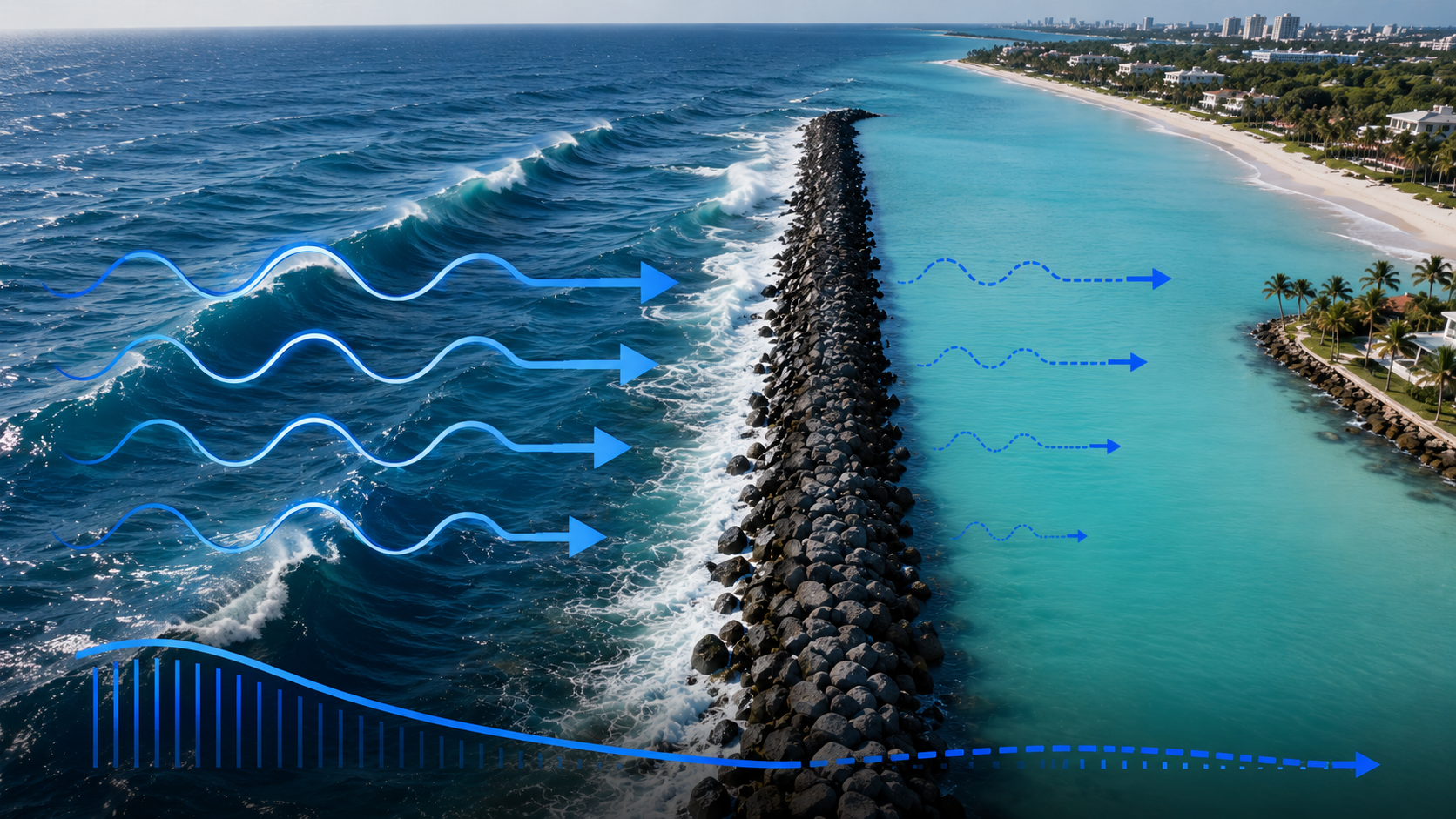
Waves carry enormous energy, which is transferred through the water as they travel. When a wave encounters a breakwater, several processes occur:
- Reflection: Part of the wave’s energy bounces back off the structure, reducing the energy that continues forward.
- Refraction: As waves move into shallower water near a breakwater, they often refract, or bend, redistributing wave energy before reaching the shore.
- Diffraction: Waves bend around the ends of the breakwater, but their height decreases as they spread into the sheltered area.
- Energy Dissipation: The structure itself absorbs energy. For example, porous structures create turbulence and friction, dissipating wave energy and reducing wave height.
The combined effect is a significant reduction in wave height and speed in the lee (protected side) of the breakwater. This calmer zone allows sediments to settle, preventing erosion and creating a stable environment for marinas, beaches, and coastal development.
What Determines Breakwater Performance
Practical breakwater design goes far beyond placing rocks offshore. During coastal engineering projects, wave modelling is typically performed before selecting a breakwater configuration.
Engineers evaluate wave height, water depth, seabed conditions, sediment transport, tidal range, and expected storm frequency before finalising the design.
Several technical criteria determine whether a breakwater will perform as intended:
Wave Transmission and Crest Elevation
The wave transmission coefficient (Kt) predicts how much wave energy passes over or through a breakwater. Lower Kt values mean better protection.
Crest elevation is critical. If the breakwater crown sits too low, wave overtopping will flood the protected area. Engineers typically design the crest at or above the design wave runup to minimize overtopping volumes.
Armor Stone Sizing
The stones or concrete armor units on the breakwater surface must withstand wave forces without dislodging. Through engineering calculations the correct size of stone can be determined. The Hudson Formula provides a starting point for sizing armor stone on conventional rubble-mound breakwaters.
The Van der Meer formula refines this for plunging versus surging wave conditions and accounts for damage progression over time, not just initiation of failure.
Return Periods and Design Storms
Coastal protection structures are designed for specific return periods. These are often 25, 50, or 100 years depending on the consequences of failure.
Hurricane design standards in Florida, for example, require breakwaters to withstand Category 3 or 4 storm conditions without structural breach. This means evaluating the 100-year wave height, not average conditions.
Types of Breakwaters
Breakwaters come in several flavors, each suited to specific conditions:
- Detached Breakwaters: These are built offshore and are not connected to the shore. They are the most common type and are often used to protect long stretches of coastline.
- Submerged Breakwaters: Submerged breakwaters are often used where visual impact matters and where moderate wave attenuation is needed.
- Nearshore Breakwaters: Placed closer to the shore, these are often used in combination with beach nourishment projects.
- Segmented Breakwaters: A series of shorter breakwaters spaced apart, which can create pocket beaches between them.
- Floating Breakwaters: These are buoyant structures tethered to the seabed, useful in areas where the water is too deep or the seabed too soft for traditional structures.
When Property Owners and Municipalities Need Breakwaters
Breakwaters are not only engineering structures. They are investments in coastal resilience that require planning, permitting, and long-term maintenance.
When Homeowners Need a Breakwater
Waterfront property owners typically consider breakwaters when:
- Erosion has visibly narrowed the beach or undermined seawalls
- Existing shoreline protection is failing or overtopping during storms
- Docks and lifts are damaged repeatedly by wave action
- Local regulators require living shoreline or offshore protection rather than hard armoring
When Municipalities Install Them
Cities and counties install breakwaters to:
- Protect public beaches and avoid costly beach renourishment cycles
- Safeguard coastal infrastructure (roads, utilities, parks)
- Meet federally funded beach project requirements
- Comply with coastal zone management regulations
Permitting and Design Process
In Florida, breakwater construction typically requires:
- Environmental Resource Permit (ERP) from the Florida Department of Environmental Protection
- Army Corps of Engineers Section 404 permit for work in navigable waters
- Local coastal construction control line (CCCL) permit
- Engineering plans sealed by a licensed professional engineer
The design process includes bathymetric survey, wave modeling, sediment transport analysis, and environmental assessment.
Timeline from initial study to construction often spans 12 to 24 months.
A typical residential-scale breakwater in Florida ranges from $3,000 to $6,000 per linear foot. Municipal projects can exceed $10,000 per foot depending on design complexity.
Inspection and Maintenance
Breakwaters require periodic inspection, especially after major storm events. Maintenance includes:
- Replacing displaced armor stone
- Monitoring for toe scour and foundation undermining
- Checking for vegetative establishment (in living shoreline designs)
- Documenting structural performance for insurance and regulatory compliance
Benefits Beyond Shoreline Protection
Breakwaters do more than reduce wave energy. They support shoreline stabilization, improve harbor safety, and strengthen coastal erosion protection.
- Harbor Calm: By creating tranquil waters, breakwaters enable safe anchorage for boats and support vibrant marinas.
- Sediment Accumulation: The reduced wave energy allows sand and sediment to accumulate behind the structure, often leading to the formation of new beaches or the widening of existing ones.
- Habitat Creation: The rocks and crevices of a breakwater provide a hard substrate for marine life, creating artificial reefs that attract fish, invertebrates, and plants.
- Coastal Resilience: They act as a first line of defense against storm surges, reducing the risk of flooding and damage to coastal infrastructure.
Environmental Considerations
While breakwaters are effective, they are not without ecological impacts. Altering wave patterns can change sediment transport, potentially causing erosion and drift of the structure.
Careful design and monitoring are essential to minimize negative effects. Modern breakwaters often incorporate eco-friendly features.
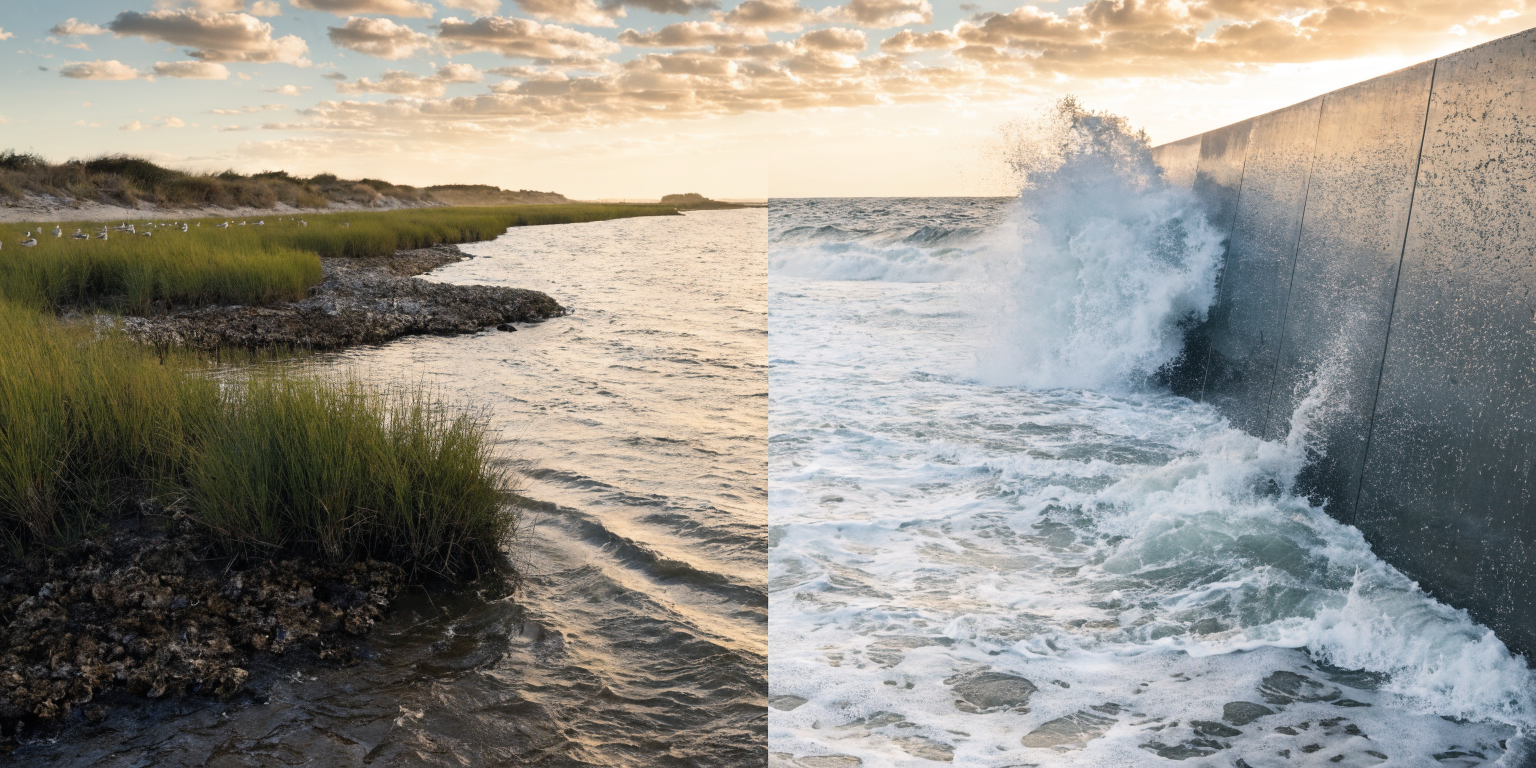
These include using locally sourced materials, creating gaps for water exchange, or integrating living elements like oyster reefs to enhance biodiversity.
Hurricane Michael Case Study
The Florida Department of Environmental Protection and FEMA assessed coastal structure performance after Category 5 Hurricane Michael struck northwest Florida in October 2018. The storm brought 160 mph winds, 7.2 meter storm surge, and extreme wave action to the Mexico Beach area.
Post storm surveys documented that properly designed rubble mound breakwaters and shoreline protection structures withstood these extreme conditions with minimal structural failure. The Florida DEP final report notes that structures built to 50 year return period standards experienced only minor armor displacement, while adjacent unprotected shorelines saw severe erosion and upland damage.
Full performance data, including wave attenuation measurements and structure-specific damage assessments, are published in the official post storm reports (Florida DEP, 2019; FEMA, 2019). This real world example confirms that site-specific engineering aligned with current USACE design standards performs as intended during extreme storm events.
Conclusion
If your waterfront property is experiencing erosion, repeated storm damage, or wave action that threatens seawalls, docks, or beaches, a professionally designed breakwater may provide a reliable long term coastal erosion solution. Every site is different, which is why a detailed engineering assessment is the first step toward selecting the right protection strategy.
Kind Designs specialises in coastal erosion protection, breakwater design support, and resilient shoreline solutions for residential, commercial, and public waterfront projects throughout Florida. Contact our team to discuss your shoreline challenges and learn whether a breakwater is the right solution for your property.