Coastal erosion is the process where waves, tides, and currents remove sand, soil, and rock from the shoreline, causing land to recede over time. It can result from natural forces or human activity and often leads to property damage and habitat loss.
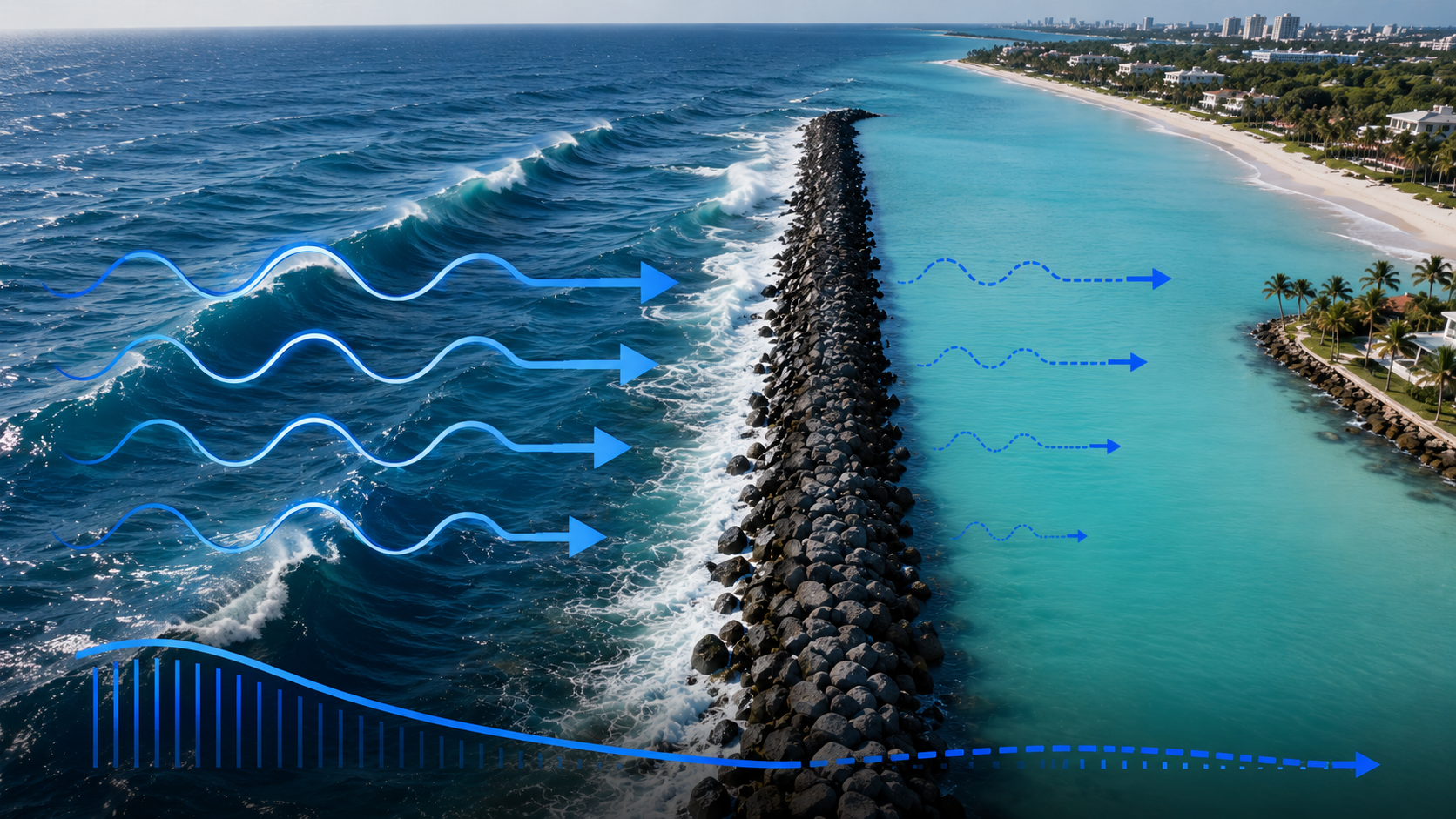
The ocean is not static. It pushes, pulls, and reshapes coastlines constantly. That means any solution that ignores hydrodynamics, wave energy dissipation, and long term shoreline behavior is usually only a temporary fix.
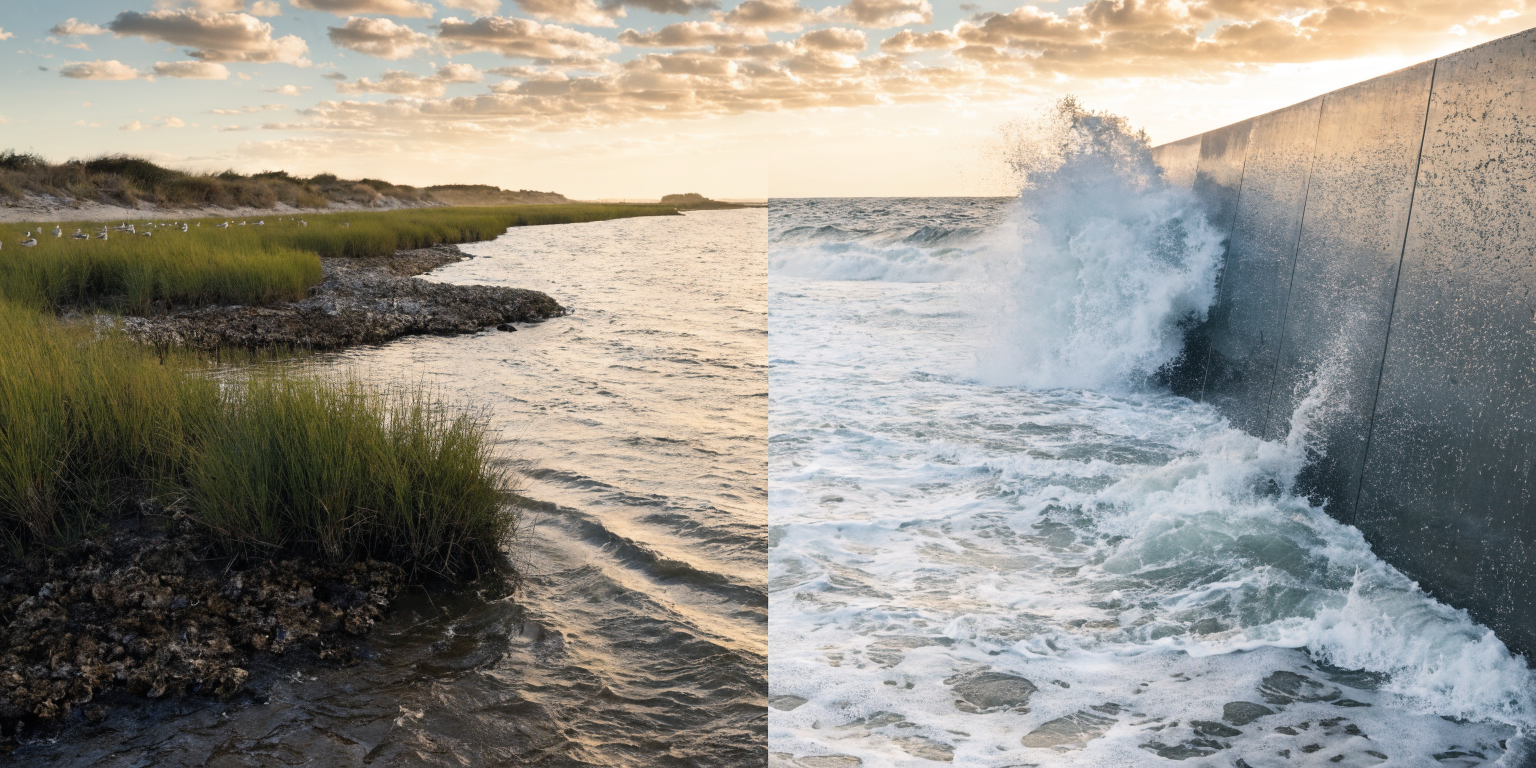
Outdated hard structures can reflect wave force instead of reducing it. That often worsens scouring and accelerates land loss nearby.
What Is Coastal Erosion?
Coastal erosion is the gradual wearing away of land along the shore. It happens when natural forces remove sediment, soil, rock, or sand faster than it can be replaced.
It is not only about sand washing away. Coastal erosion also involves mechanical breakdown and chemical change. Waves can fracture cliffs, tides can pull loose sediment offshore, and saltwater can weaken soils and rock over time.
In simple terms, the shoreline is always changing. Some of that change is natural, but when erosion speeds up, the results can be serious coastal land loss, habitat damage, and property risk.
How Does Coastal Erosion Work? The 4 Natural Processes
Coastal erosion happens through four main processes. Each one removes material from the shoreline in a different way, but they often work together during storms and high tides.
Hydraulic Action
Hydraulic action is the sheer force of water crashing against land.
When waves hit a cliff, dune, or seawall, they force water and air into cracks and weak points. The pressure builds, the rock or soil loosens, and pieces break away.
This is one of the most direct forms of wave energy dissipation at the shoreline, but it can also cause serious damage when the coast is already fragile.
Over time, repeated impact deepens cracks and increases scouring at the base of the shore.
Abrasion (Corrasion)
Abrasion, also called corrasion, happens when sediments and rocks are thrown against the shore like sandpaper.
Waves do not just bring water. They also carry sand, shells, and small stones. As these materials move back and forth, they grind down the shoreline surface.
This process is especially strong during storms, when wave force increases and larger particles are pushed into the coast.
Abrasion can quickly wear away softer rock, weaken coastal slopes, and speed up shoreline retreat.
Attrition
Attrition is the process where rocks and pebbles collide with one another and break into smaller pieces.
As waves move sediment along the coast, the particles crash together. Each collision makes them smoother, rounder, and smaller.
While attrition does not always remove large amounts of land by itself, it helps turn larger material into finer sediment that can be carried farther away by tidal currents.
That means the shoreline slowly loses its protective material over time.
Corrosion (Chemical Weathering)
Corrosion is chemical weathering caused by saltwater dissolving parts of the rock or soil.
Some coastal materials contain minerals that react with seawater. As this happens, the shoreline weakens and becomes easier for waves to break apart.
This process is slower than hydraulic action or abrasion, but it still matters. In areas with porous rock or unstable soils, corrosion can make erosion much worse.
Together, these four processes explain how the ocean slowly reshapes coastlines, cliffs, beaches, and wetlands.
Primary Causes of Coastal Erosion
Coastal erosion is driven by both natural forces and human activity. In many places, the two are linked, which makes shoreline retreat even faster.
Sea Level Rise and Storm Surges
Sea level rise is one of the biggest long term drivers of erosion.
As sea levels rise, waves reach farther inland and attack parts of the coast that were once protected. That means more frequent flooding, faster land loss, and greater pressure on coastal properties.
Storm surges make the problem worse. Strong winds push water toward shore, raising water levels and allowing waves to hit with more force.
Tides also play a role. High tides can move the active wave zone closer to dunes, bluffs, and seawalls, increasing erosion over time.
Climate change is intensifying these conditions in many regions. Stronger storms, higher water levels, and changing wave patterns all contribute to shoreline retreat.
Human Induced Causes
Poorly planned coastal development can interrupt the natural flow of sand and sediment.
When buildings, roads, seawalls, and other structures are placed too close to the shoreline, they can block normal beach movement and reduce the supply of sand to nearby areas.
Dredging can cause similar problems. By changing seabed contours and sediment pathways, it can disturb the balance that naturally feeds beaches, dunes, and wetlands.
This is one reason why shoreline armoring often creates new problems while trying to solve old ones. Hard structures may protect one property, but they can also shift erosion to neighboring shorelines.
In some cases, the result is worse marine ecosystem degradation, reduced habitat quality, and faster coastal land loss.
The Devastating Effects of Shoreline Erosion
Coastal erosion is more than a shoreline problem. It creates real damage for homes, roads, utilities, marinas, and public assets.
Waterfront Property and Infrastructure Damage
For homeowners, erosion can reduce property size, damage landscaping, and bring flood water closer to foundations.
As shoreline retreat continues, the risk to docks, seawalls, roads, pipes, and storm water systems increases. In some places, repeated wave attacks can undermine entire sections of infrastructure.
Municipalities often face high repair costs, emergency response expenses, and long term maintenance burdens. Once the shoreline starts to move inland, the financial impact can grow quickly.
This is why impacts of rising sea levels on coastline properties are such a major concern. Loss of land is only part of the problem. The bigger issue is the cost of keeping people and structures safe over time.
Loss of Coastal Habitats and Biodiversity
Erosion does not just damage property. It also destroys habitat.
Beaches, dunes, seagrass beds, mangroves, oyster areas, and shallow coastal zones all depend on stable conditions. When erosion speeds up, these habitats can be buried, exposed, or washed away.
That leads to marine ecosystem degradation, lower biodiversity, and fewer nursery areas for fish and other species.
Traditional shoreline armoring often makes this worse. By hardening the coast, it can block natural habitat growth and disrupt the exchange of sediment and nutrients that many marine species depend on.
The result is a shoreline that is physically protected in one sense, but biologically poorer and less resilient in the long run.
Traditional Coastal Erosion Solutions and Why They Often Fail
Many older erosion control methods were designed to stop water from reaching land. In practice, they often only move the problem somewhere else.
Soft Engineering: Beach Nourishment and Vegetation
Beach nourishment adds sand to widen or rebuild a beach.
Vegetation can help stabilize soil and dunes by holding sediment in place with roots and stems.
These methods can be useful in the right conditions. They are often better than hard armoring when the goal is to preserve a natural shoreline appearance.
Hard Engineering: Traditional Seawalls and Riprap
Traditional seawalls and riprap were built to protect land from direct wave attack.
They can seem effective at first because they create a physical barrier between the ocean and property.
But they often fail to solve the deeper problem.
How Living Seawalls Are Changing Coastal Protection
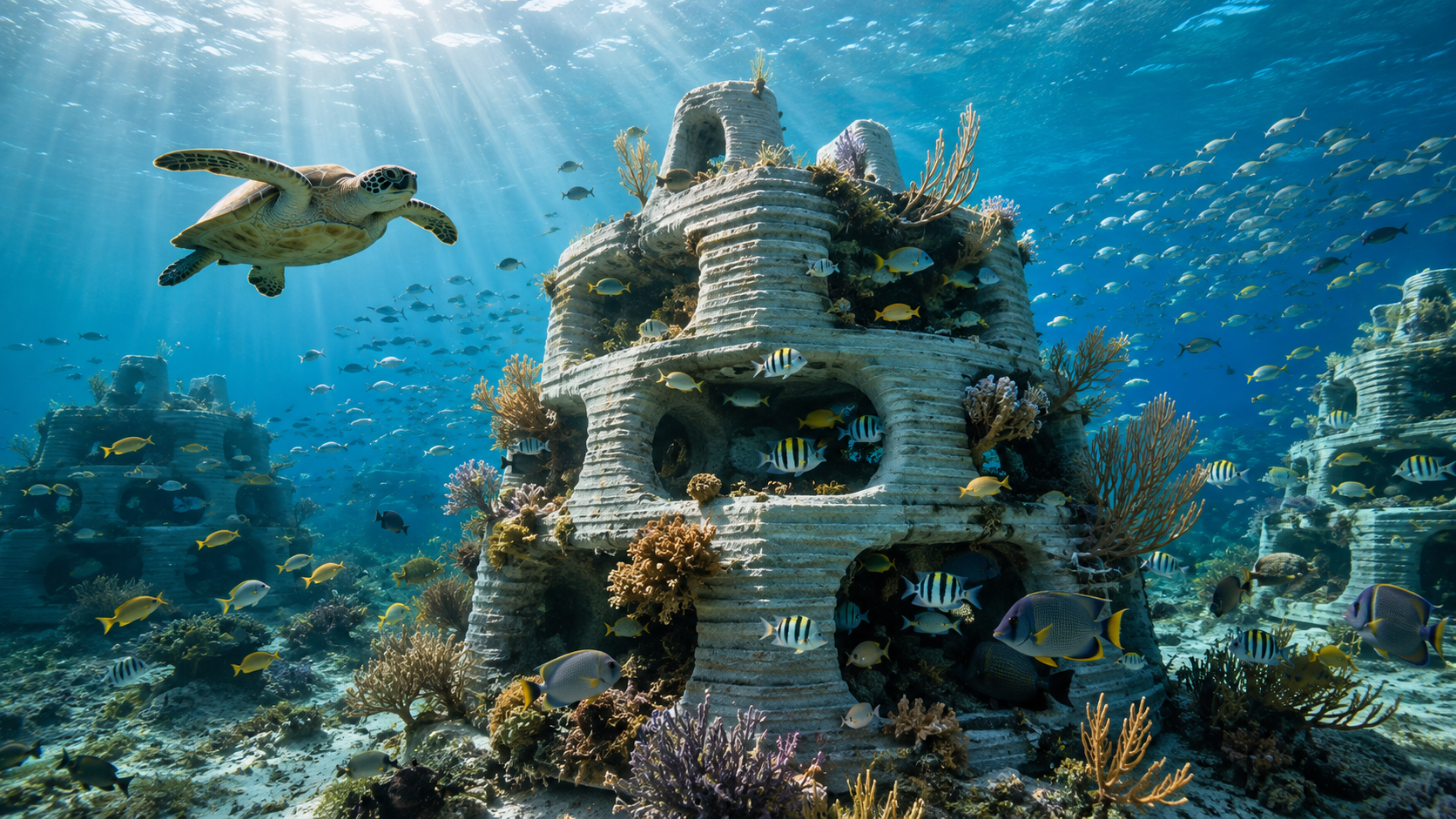
If the goal is long term shoreline protection, the answer cannot be just bigger walls. The future of coastal defense is a structure that protects property while also helping the coast function more naturally. That is the idea behind Living Seawalls from Kind Designs.
Kind Designs uses 3D printed seawalls to create exact fits for specific shoreline conditions.
That matters because every coast is different. Water depth, tide range, wave exposure, soil type, and current patterns all affect how a shoreline behaves.
By tailoring the design to the site, the structure can better support wave energy dissipation and reduce the kind of harsh reflection that causes scouring around traditional seawalls.
Just as important, the materials are non toxic. That helps protect nearby water quality and makes the structure safer for marine species that may live, feed, or reproduce along the shoreline.
Ready to Protect Your Shoreline the Right Way?
If you are dealing with shoreline retreat, coastal land loss, or repeated storm damage, it may be time to move beyond outdated concrete and toxic materials.
Instead of relying on a flat wall that reflects wave force and increases scouring, invest in a solution built for the future of your waterfront property.
Kind Designs offers 3D-printed Seawalls that are designed to protect shorelines, support marine habitat, and fit the needs of each site.