Waterfront erosion can damage your shoreline faster than most property owners expect. One storm or a season of heavy boat wake can wash away soil, weaken foundations, and reduce property value.
If you’re comparing a living shoreline vs seawall, understanding whether a living shoreline solution or a traditional seawall is the better fit depends on wave exposure, lot layout, and how quickly you need protection.
The Core Difference Between the Two Methods
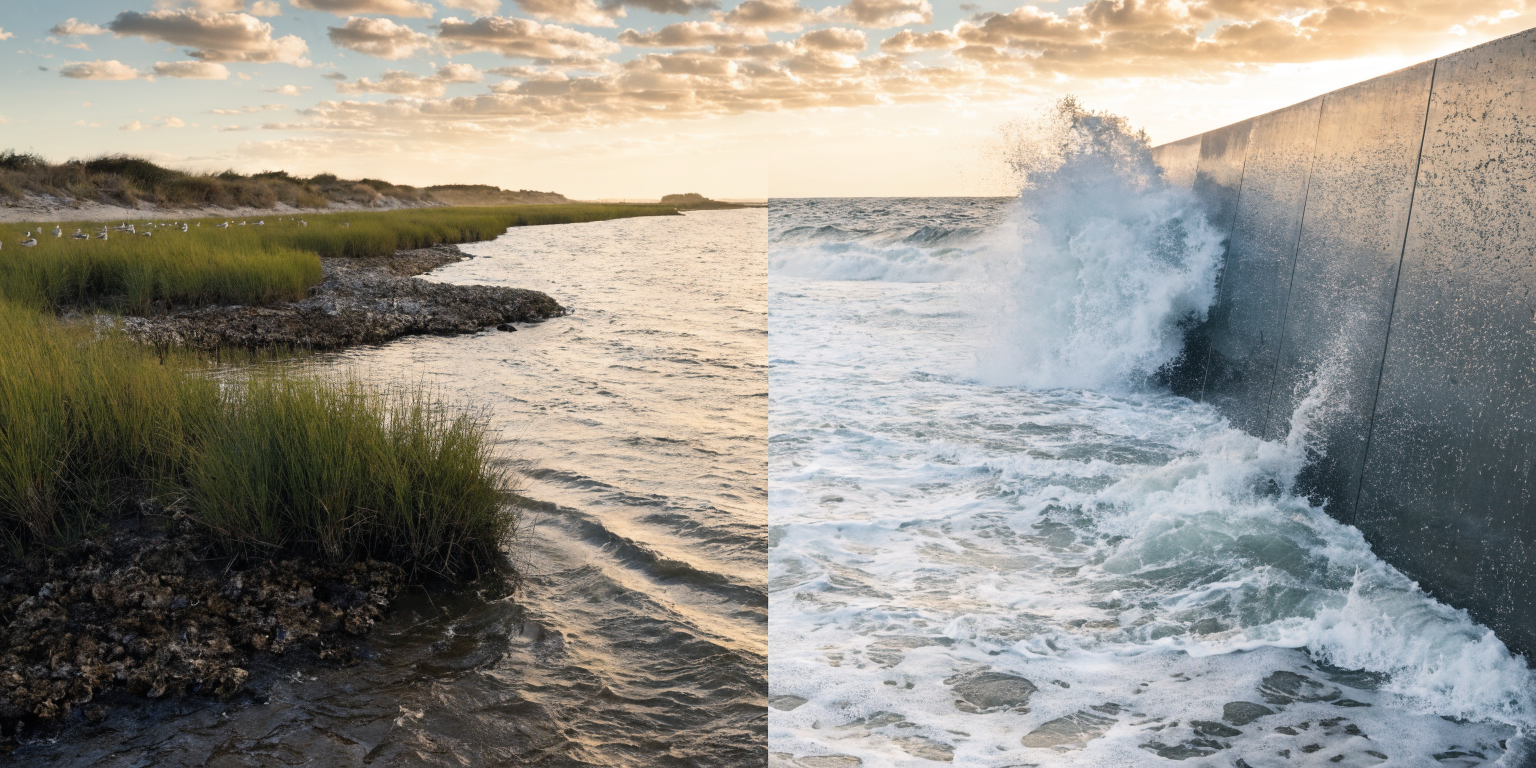
A living shoreline works best for protected waterfronts with low wave energy and enough space for vegetation to establish. A seawall works best for shorelines exposed to strong waves, frequent boat wake, or urgent erosion near buildings. The right choice depends on wave conditions, shoreline layout, permitting, and how quickly protection is needed.
| Factor | Living Shoreline | Seawall |
| Wave Energy | Low | High |
| Protection speed | Gradual | Immediate |
| Environmental impact | Positive | Negative |
| Upfront cost | Lower | Higher |
| Maintenance | Light after maturity | Structural inspections |
| Permitting | 6 Months – 1 Years | 3 – 6 Months |
| Appearance | Natural | Hard structure |
Wave Energy Determines Your Best Option
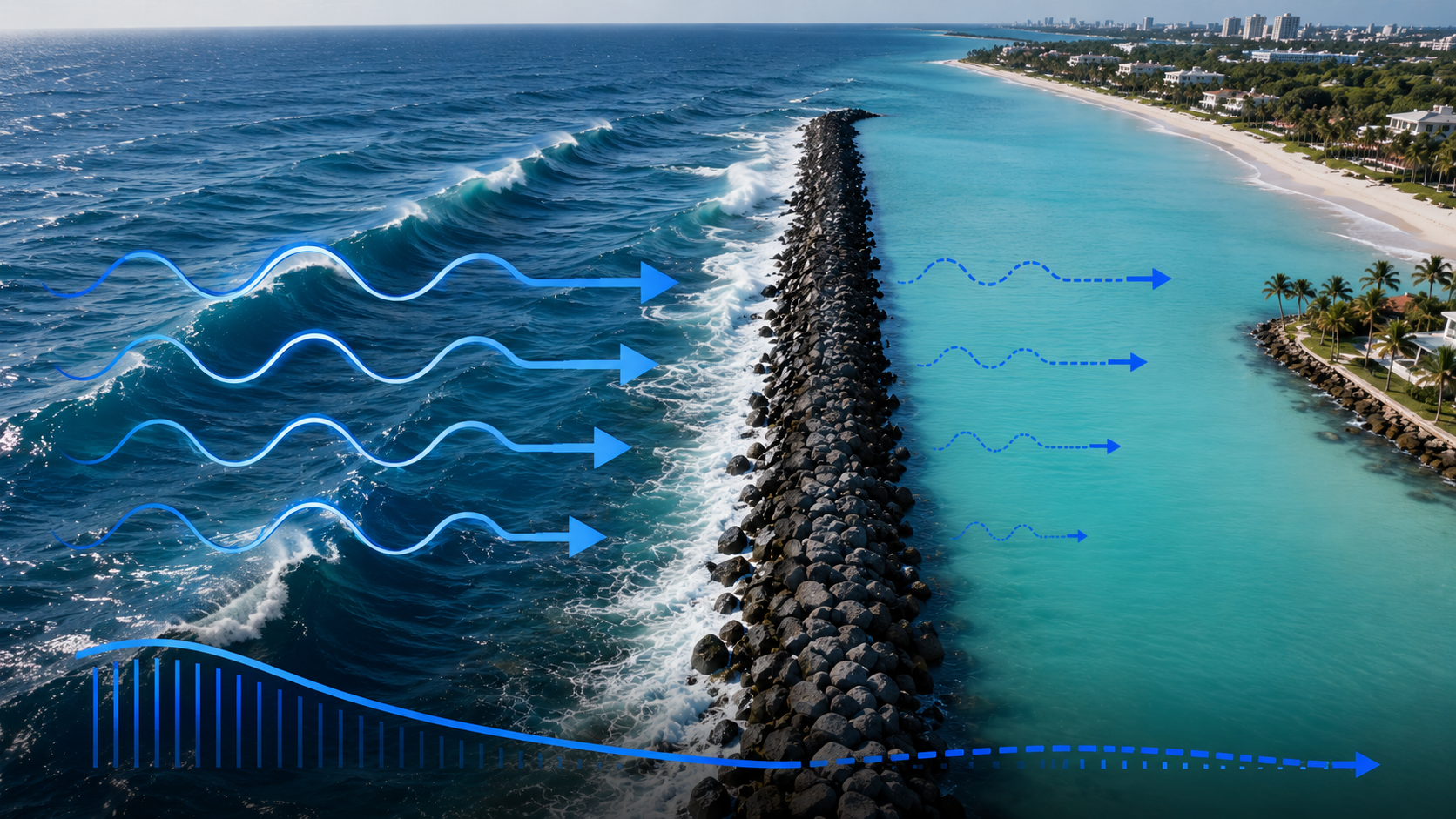
This is the single most important factor in your decision. If your property experiences high wave energy, a living shoreline cannot survive long enough to establish its root system. If your property has low wave energy, a seawall is overkill and causes unnecessary environmental damage.
Living shorelines work best when:
- Wave height is less than one foot during normal conditions
- Your property is on a protected bay, tidal creek, or canal
- Boat wakes are minimal and infrequent
- Storm surge is not a major concern for your area
Seawalls are necessary when:
- Wave height regularly exceeds two feet
- Your property faces an open ocean, large bay, or major lake
- Heavy boat traffic creates constant wake action
- Storm surge poses a direct threat to buildings and structures
Installation Timeline: Immediate vs Delayed Protection
A seawall works from day one. Construction takes weeks, not years, though permitting can take several months. You get instant protection against active erosion.
A living shoreline needs two to three growing seasons to become fully effective. During that time, the shoreline is vulnerable. Temporary measures like coir logs or rock sills can provide early protection. After three years, the system becomes self-sustaining.
If your property is actively eroding and you cannot wait, a seawall is the practical choice. If you have time and low wave energy, a living shoreline pays off long term.
Maintenance Requirements Over Time
The maintenance needs of each method are very different. Understanding these requirements before you build helps you avoid surprises down the road.
Living shoreline maintenance includes:
- Inspecting plants after major storms for damage
- Replacing any vegetation that was washed away
- Removing invasive species that compete with native plants
- Checking coir logs or rock sills for displacement
- Adding fresh oyster shell or stone if needed
- Ensuring drainage channels are not eroding the bank
Seawall maintenance includes:
- Inspecting for cracks, rust, or corrosion on the wall face
- Checking the toe of the wall for scour or undermining
- Monitoring for leaning or bulging sections
- Repairing weep holes if they become clogged
- Addressing any settlement or foundation movement
Cost Comparison: Living Shoreline vs Seawall
Cost is a major factor for most property owners. The decision between living shoreline vs seawall cost depends on shoreline length, site access, permitting, and local conditions.
Living shoreline:
- Lower material costs because plants and natural materials are less expensive than concrete or steel
- Higher early phase costs for plant establishment and monitoring
- Often lower long term maintenance once the system matures
- May qualify for grants or incentives from conservation programs
Seawall:
- Higher upfront construction cost driven by excavation, materials, and engineering
- Immediate structural protection with no waiting period
- Repair costs can increase significantly as the wall ages
- May require mitigation expenses depending on local regulations
A professional inspection gives the most accurate pricing for your specific property. Many shoreline stabilization contractors near Miami provide free estimates for both methods.
Environmental Impact Is a Major Difference
This is where the two methods diverge completely. A living shoreline enhances the environment. The plants filter runoff and improve water quality. The root systems provide habitat for fish, crabs, and birds. Over time, the shoreline becomes more biodiverse and resilient to changing conditions.
A seawall harms the environment in several ways. It eliminates shallow water habitat where juvenile fish feed and hide. It reflects wave energy, which increases erosion on adjacent properties. It prevents natural sediment movement, starving beaches downstream of sand. These impacts have led many coastal communities to restrict new seawall construction.
Regulatory trends now favor living shorelines:
- Many coastal states have policies that prioritize nature based solutions
- Permits for seawalls are harder to obtain than they were a decade ago
- Some jurisdictions offer technical assistance for living shoreline projects
- If you build a seawall, you may be required to include mitigation measures
Matching the Solution to Your Property
Every property is different. The right choice balances protection, environmental responsibility, and the specific conditions of your site. Here is a simple framework to guide your decision.
Choose a living shoreline when your property meets these conditions:
- Low wave energy from a protected water body
- At least 15 feet of land between your building and the water
- A gentle slope that can be graded further if needed
- Willingness to wait two to three years for full establishment
- Interest in improving wildlife habitat and water quality
- Desire for a natural appearance that blends with the landscape
Choose a seawall when your property meets these conditions:
- High wave energy from open water or heavy boat traffic
- Very narrow lot with no room for a sloped bank
- Active erosion that requires immediate intervention
- Critical structures located very close to the water edge
- Preference for a long term solution with minimal routine attention
- Tolerance for a more industrial appearance at the shoreline
Hybrid Approaches for Moderate Conditions
Some properties benefit from combining both methods. A low rock sill installed at the water edge provides immediate wave protection. Native plants are then placed behind the sill where they are sheltered from direct wave impact. The rock breaks the energy while the plants stabilize the upper bank.
This hybrid approach works well for moderate energy sites. It offers the durability of hard structure with the environmental benefits of vegetation. Many coastal engineers now recommend hybrid designs as the best compromise for properties that fall between low and high energy conditions. This is a smart choice for waterfront property erosion solutions.
How We Evaluate Your Shoreline Before Recommending a Solution
We do not choose a solution first and then look for reasons to justify it. We start with your specific property conditions and let the site tell us what works. Here are the ten factors we check during a professional assessment.
Wave energy and fetch distance
We measure wave height and fetch distance first because these two factors eliminate more options than anything else. High wave energy and long fetch rule out a living shoreline. Low wave energy and short fetch make a seawall unnecessary.
Boat traffic and soil type
Constant boat wake creates wave energy that looks different from wind driven waves. We track peak traffic hours and wake height. Soil type matters for root establishment in living shorelines and for wall foundation design in seawalls. Sandy soils are easier to plant. Clay soils require deeper wall penetration.
Bank slope and water depth
A steep bank cannot support a living shoreline without heavy grading. We check whether you have enough room to create a gentle slope. Water depth at the toe of the bank determines whether a seawall needs a deep foundation or can use a lighter sheet pile.
Existing erosion rate and nearby structures
We measure how fast your bank is receding. Active erosion above 1 foot per year requires faster protection than a living shoreline can provide. We also look at neighboring seawalls, docks, and buildings that may affect water flow or wave reflection on your lot.
Local permitting and long term property goals
Permitting restrictions vary by county and water body. Some areas ban new seawalls. Others offer fast track permits for living shorelines. We also ask about your plans for the next 10 to 20 years. A living shoreline fits well if you want natural habitat and lower maintenance. A seawall fits better if you plan to build close to the water and want maximum protection from storms.
Conclusion
No online guide can replace a professional site assessment. Wave energy, soil type, water depth, and local regulations all affect your choice.
The quickest way to get a clear answer is to schedule a shoreline evaluation with a coastal engineer who knows your local conditions. They will measure your wave exposure, check your soil, and tell you exactly which m – ethod fits.
Schedule a shoreline evaluation today to find the right erosion control solution for your property.