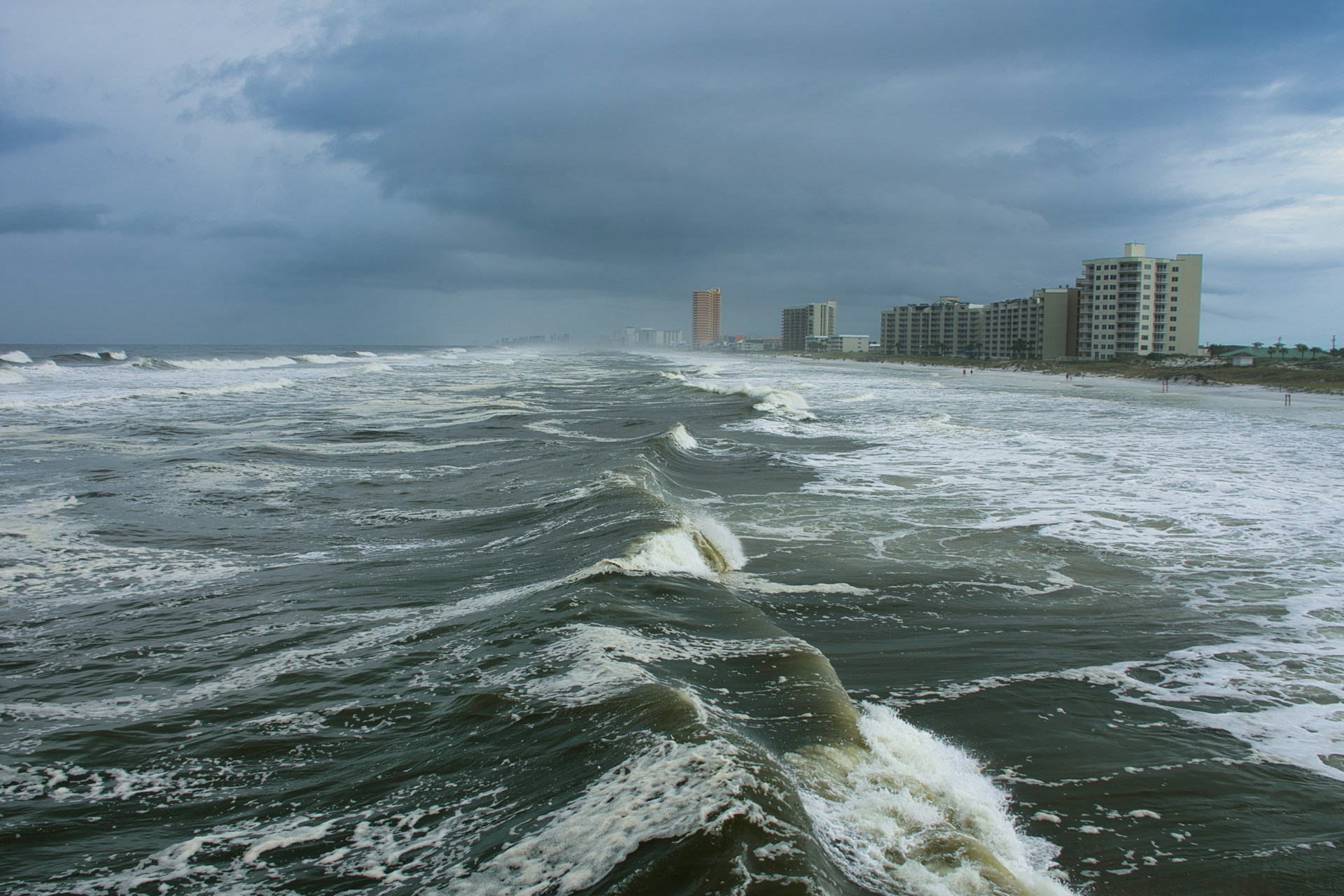
Hurricane season started on June 1 and will close on November 30. The weeks before June are the only calm window a waterfront owner gets. That window is the last chance to learn whether your seawall, your yard, and your drainage can withstand the upcoming storms. Surge is the first thing that arrives. Storm surge is historically the leading cause of hurricane related deaths in the United States, according to the National Hurricane Center.
The twelve signs below are the ones we look for during every waterfront inspection in Miami Each one looks small on its own, which is why owners almost always miss them. Together they tell the real story: whether your line of defense is ready for the season or already compromised.
The weather calendar is fixed, but two other clocks are not. A new flood insurance policy through the National Flood Insurance Program takes effect 30 days after purchase. That means coverage bought in June rarely covers the start of the season. Contractor calendars fill just as fast. Once a storm appears in the forecast, repair crews book out within days. In Florida, seawall work that needs environmental the permitting timeline grows tremendously as homeowners rush to submit their applications. So a problem found in May is a scheduled project, while a problem found in August is an emergency.
The 12 Warning Signs to Look For
The signs fall into three groups. The wall talks first, then the land behind it, then the parameter. Before you start, it helps to understand what a seawall is actually supposed to do along Florida’s coastlines. Each sign below is a failure of that job.
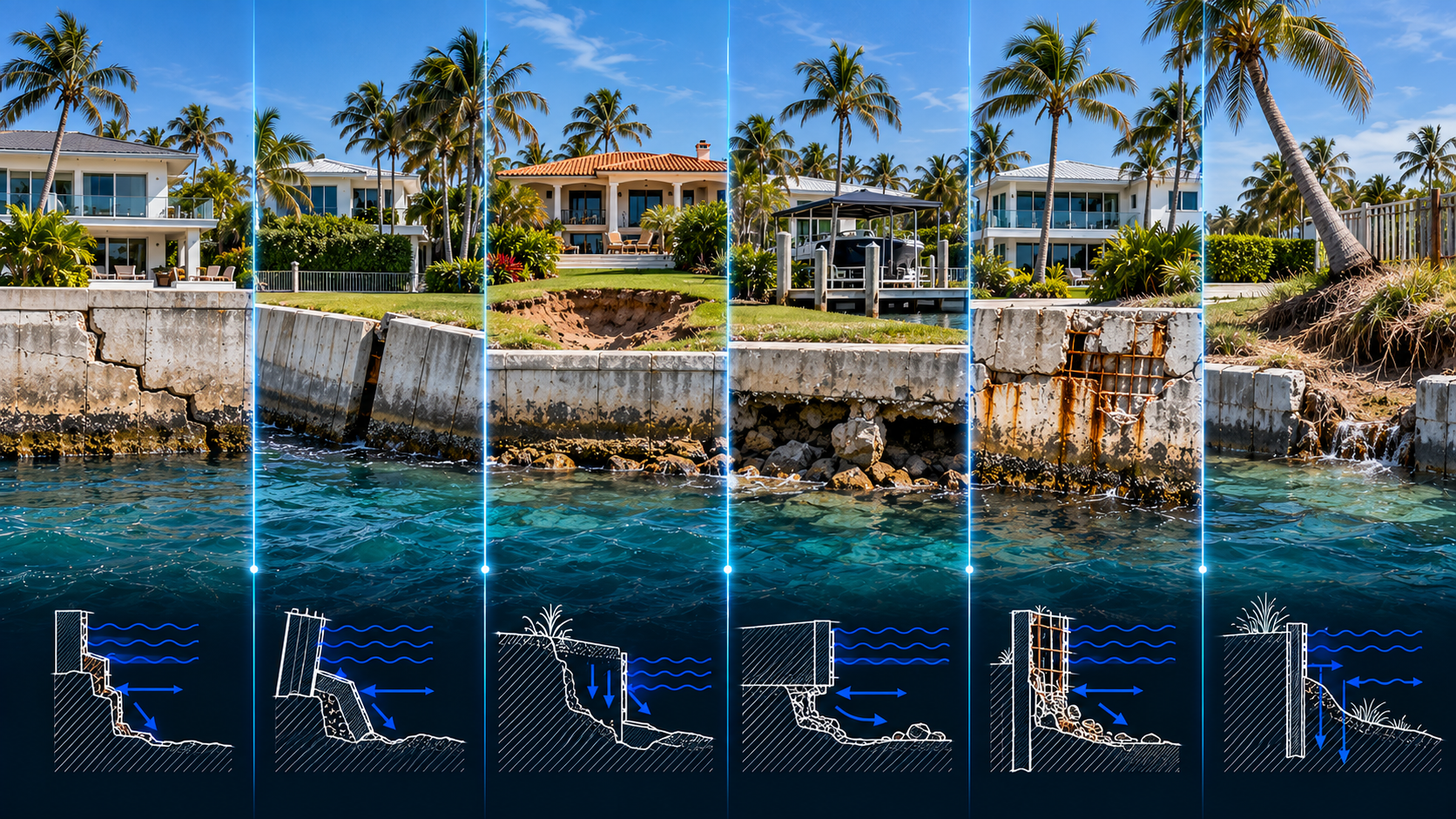
1. Cracks that widen, step, or run sideways
Every concrete seawall collects hairline cracks after years in the Florida sun, and most of them are cosmetic. The cracks that matter are the ones you can follow with a fingertip. A crack that steps up panel by panel, runs across the middle, or widens between visits is a structural signal. Water finds those lines during surge and drags soil out behind the wall. Mark the widest point and measure it again in two weeks. If the gap grows, the wall is moving, and a moving wall is an engineer’s problem, not a patch job.
2. A lean you can read from the yard
Stand at the end of the wall and sight down the top edge. If the line dips toward the water, the wall is rotating around its toe. A slight lean can be fine in an older structure. But a lean you can see from the house means the anchors behind the wall are giving way. Surge pushes hardest on exactly that spot. A leaning wall is always the first to fail in a storm.
3. Sinkholes, dips, and soft ground behind the wall
This is the sign that worries us most during an inspection. Soil disappears quietly behind a wall long before the wall itself gives way. A dip in the lawn, a low strip behind the wall, or a sinkhole near the cap means backfill is washing out. The wall is now holding water with nothing solid behind it. Walk the ground between your home and the seawall after a heavy rain and look for new low spots. Mark each one and check it again in a week. If they deepen, you are losing soil at a pace a storm will only speed up. Sometimes you can lean over your seawall and actually see the sand and dirt accumulating on the other side. This is coastal erosion working close to home, the same process that reshapes open beaches over years.
4. Scour carved out under the wall
Check the base at low tide, because the bottom of a seawall should sit in mud or sand, not open air. Exposed footing, a gap under a panel, or fallen stone at the toe: water is digging the wall out from below. Scour is common along canal lots where boat traffic runs close to the bank. Around Miami it is the failure pattern we see first on aging walls. If you can see daylight under the wall at the waterline, the wall is standing on borrowed support.
5. Rust stains, spalling concrete, and exposed rebar
Rust streaks on a concrete wall are not a cosmetic problem. They mean water has reached the steel rebar inside, and corroding steel expands. That swelling pushes the concrete outward until it spalls and falls away, exposing still more steel to saltwater. The cycle feeds itself. Tap any flaking section with a hammer. A hollow sound or a crumbling edge means the protective cover is gone. On steel sheet pile walls, rust that flakes in layers is section loss, and section loss is strength loss.
6. Water seeping through the joints at high tide
Seams between panels should stay dry when the tide rises. Water pushing through a joint means the ground behind the wall is saturated and pressure is building. If sand or silt washes out with the seep, your yard is leaving through the wall. Small leaks can be sealed with waterstops, but only after a structural check settles the honest call between repair and replacement. Sealing a joint on a wall that is still shifting is money lost before the next storm.
7. Trees leaning toward the water
A tree that tilts toward the shoreline is not a landscaping quirk. It is a soil report, because roots hold the bank together. A falling tree usually means the edge has already given way underneath it. The same logic covers gates, fences, and light poles near the waterline. A post that once stood straight and now tilts is telling you the ground below it is moving. Take the tree seriously, and treat the leaning ground as an erosion signal, not a yard problem.
8. Shoreline vegetation that is thinning or dying
Grass that browns along the water or trees that drop leaves are both signs the bank is losing ground. A lawn edge that creeps back a few inches each season is the same story. Salt tolerant plants are the cheapest erosion control you will ever own. Their roots stitch the soil together, and their stems slow small waves. When that vegetation dies, bare soil follows, and bare soil is exactly what storm surge moves first. USGS research along the American coast tracks how shoreline positions change over time. Your yard follows the same physics at a smaller scale. If the edge is already bare, a living shoreline built with the right plants can rebuild it before the season.
9. Water pooling behind the wall and blocked drainage
After a normal rain, water should move away from the seawall. Puddles that sit for days along the back of the wall add weight and pressure to a structure already holding the tide. Check the weep holes and every outfall pipe, because they clog with silt and leaves after each wet season. A blocked weep hole is a pressure valve that will not open when surge arrives. Clear the line, then watch the next rain to confirm the water moves.
10. Loose pilings, shifting decking, and corroded dock hardware
The dock takes the worst beating in any storm, and an unsecured dock becomes a battering ram against your seawall. Push on the deck at the outer end and watch the pilings. Wobble, cracked caps, and rusted brackets all say the structure is near the end of its service life. Then look at what sits on the dock. Kayaks, toolboxes, and outdoor furniture become missiles in hurricane wind. Anything loose needs to be tied down or moved inland before the hurricane season opens.
11. Cracks in the driveway, patio, or foundation near the shore
Cracks on the land side of the house deserve attention even when they sit far from the water. Settlement in the seawall zone can pull the ground under patios, walkways, and foundations. Watch for cracks that are wider at one end, doors that start to stick, and floors that develop a slope. These are slow signals, but they come from the same soil movement that threatens the wall. A foundation survey now costs far less than a foundation repair after a storm.
12. A repair history with no engineering check behind it
Here is the quietest warning sign of all: a wall that has been patched, with no explanation of why it failed. Every patch is a clue. A wall patched twice in ten years is being managed, not fixed. If no structural report is on file, treat that as a sign on its own. The same applies when nobody has inspected the wall since the last named storm passed through. The cost of a condition survey is small next to the cost of being wrong.
What to Do When You Find a Sign
One sign is enough to act on. Two signs in the same zone mean the structure is talking. Start with a professional condition survey. The survey answers the question that decides everything: sound but aging, or actively moving. A wall that is sound can often be retrofitted with living seawall tiles that add marine habitat without a full rebuild. A wall that is moving calls for a deliberate decision. The range of coastal erosion solutions for waterfront properties belongs in that conversation. Waiting through a storm season turns a scheduled project into an emergency one. If the wall has already lost soil behind it, delaying until fall only deepens the cost.
Checklist for the Hurricane Season
| # | Warning sign | Look for | Action now |
| 1 | Cracks | Wider, stepped, or growing lines | Measure twice, two weeks apart; engineer if it grows |
| 2 | Lean | Top edge dips toward the water | Order a tilt survey |
| 3 | Sinkholes and dips | Low spots behind the wall | Mark, monitor, restore backfill |
| 4 | Scour | Exposed footing at low tide | Engineer before surge season |
| 5 | Rust and spalling | Flaking concrete, rust streaks | Probe with a hammer; plan repair |
| 6 | Joint seepage | Water at the seams in high tide | Confirm the wall is stable, then seal |
| 7 | Leaning trees | Trunks and posts tilting | Remove hazards; treat soil as unstable |
| 8 | Dying vegetation | Thinning grass line and mangroves | Plant salt tolerant cover; consider a living shoreline |
| 9 | Ponding water | Puddles along the wall after rain | Clear weep holes and outfalls |
| 10 | Loose dock | Wobbling pilings, rusted hardware | Tie down or move loose gear |
| 11 | Foundation cracks | Cracking patios and sticking doors | Order a foundation survey |
| 12 | No inspection record | Patches without a structural report | Book a condition survey |
Before hurricane season, the question is not whether your seawall will face a storm. It is whether the storm will find the one weak spot you never inspected. Walk these twelve signs in the calm weeks, fix what you find, and give the storm nothing easy to take. If you want an honest read on your seawall or shoreline, talk to the Kind Designs team. They walk waterfront properties around Miami and lay out the real options with real numbers. A living seawall can hold the line and bring habitat back to the water’s edge. Estimate the project with the seawall cost calculator, then talk to the team about your site.