A breakwater is the most effective defense against coastal erosion and storm damage for South Florida waterfront properties. Without one, seawalls fail, beaches disappear, and docks break during hurricanes. This article covers the essential types, design methods, construction approaches, and modern innovations that work specifically for the Atlantic and Gulf coasts from Miami to Naples. It also explains the common challenges and how to solve them. This article covers the essential types, design principles, and construction methods of breakwaters, with a focus on how innovative approaches like those from Kind Designs are redefining the field.
What Is a Breakwater?
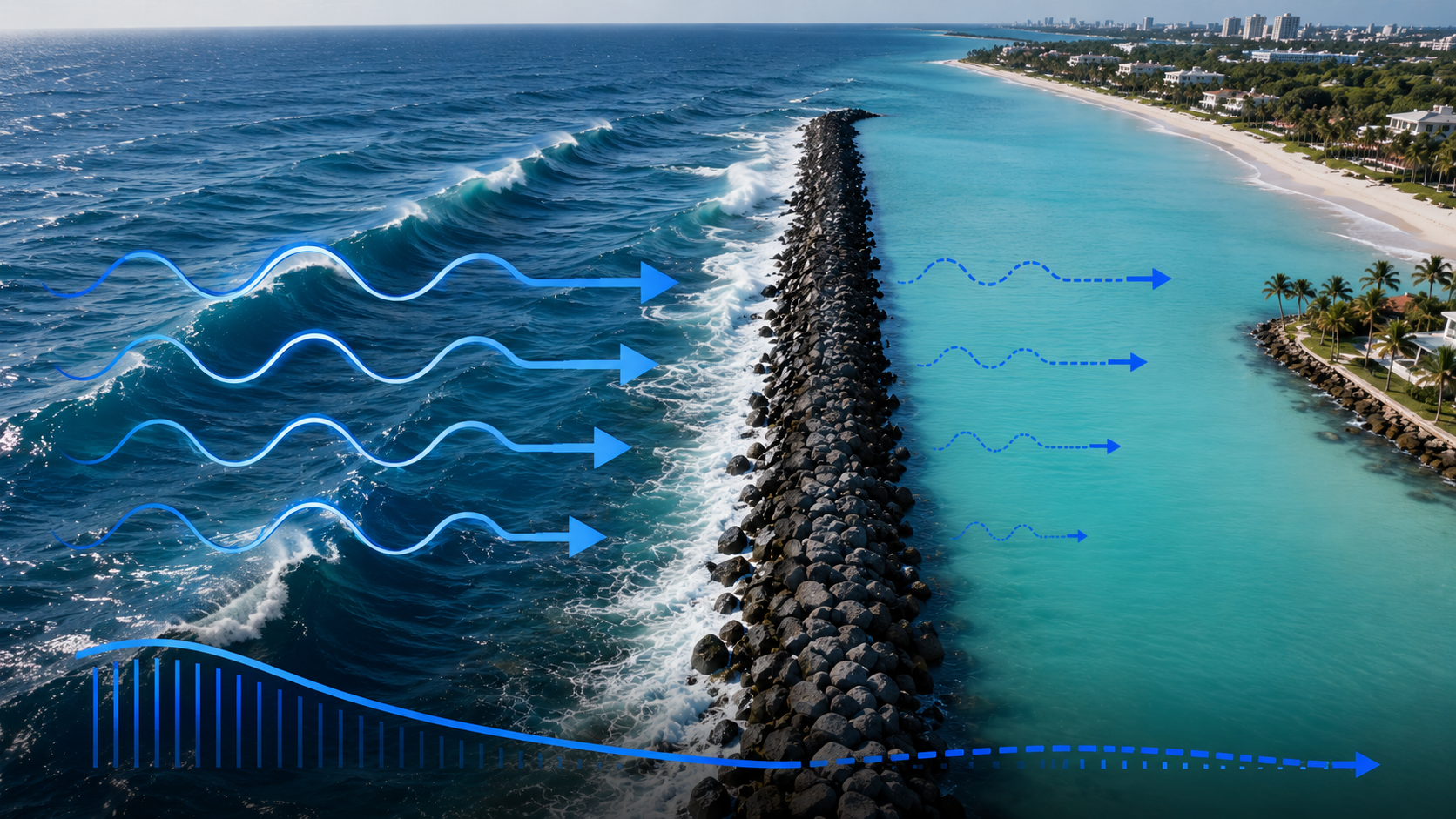
A breakwater is a structure placed offshore, parallel to the shoreline, to absorb or deflect wave energy. In South Florida, breakwaters protect against 8 to 12 foot storm waves from hurricanes, reduce erosion on Atlantic and Gulf coast properties, and create calm water for marinas from Miami to Palm Beach. Without a properly engineered breakwater, your seawall or shoreline will fail during the next Category 2 storm. That is not speculation. It is documented damage from Hurricane Irma and Wilma. Breakwaters serve as the backbone of coastal protection, reducing the impact of currents, tides, and storms on both natural beaches and built infrastructure.
Types of Breakwaters
Breakwater types are selected based on wave conditions, water depth, and the level of protection needed. The main categories include conventional rubble mound structures, berm breakwaters, caissons, low crested submerged breakwaters, and floating breakwaters. In addition, living breakwaters are emerging as a hybrid type that combines wave attenuation with ecological restoration.
Rubble Mound Breakwaters
The most common type in South Florida. Built by piling graded stone from the Lake Belt quarries or the Bahamas. Armor stones weigh 5 to 15 tons. A multilayered cross section includes a core of small stone, underlayers, armor layer, toe protection, and scour apron. The slope is typically 2:1 or 3:1. These structures dissipate wave energy through gaps between rocks. They are forgiving, repairable, and allow some water exchange.
Caisson Breakwaters
Prefabricated concrete boxes floated to site and sunk onto a stone bed. Used at Port of Miami and Port Everglades where space is limited and ships need a vertical face. They reflect wave energy, which causes scour at the toe if not protected with a rock apron. Caissons require deep foundations and are expensive. Failure is sudden if undermining occurs.
Low Crested and Submerged Breakwaters
These sit partially or fully underwater. They reduce visual impact and maintain water exchange. Common in Biscayne Bay and along the Gulf coast where seagrass and turtle habitats are sensitive. Allow some overtopping, which limits wave energy while feeding sand to the lee side.
Berm Breakwaters
Dynamically stable. Stones reshape under wave action into a natural profile. Lower construction cost but require model testing to predict performance. Suitable for moderate wave climates in protected areas like Florida Bay.
Floating Breakwaters
Anchored to the seabed with chains or piles. Used for temporary protection at construction sites or in marinas where water depth prevents fixed structures. Limited to wave heights under 4 feet.
Living Breakwaters
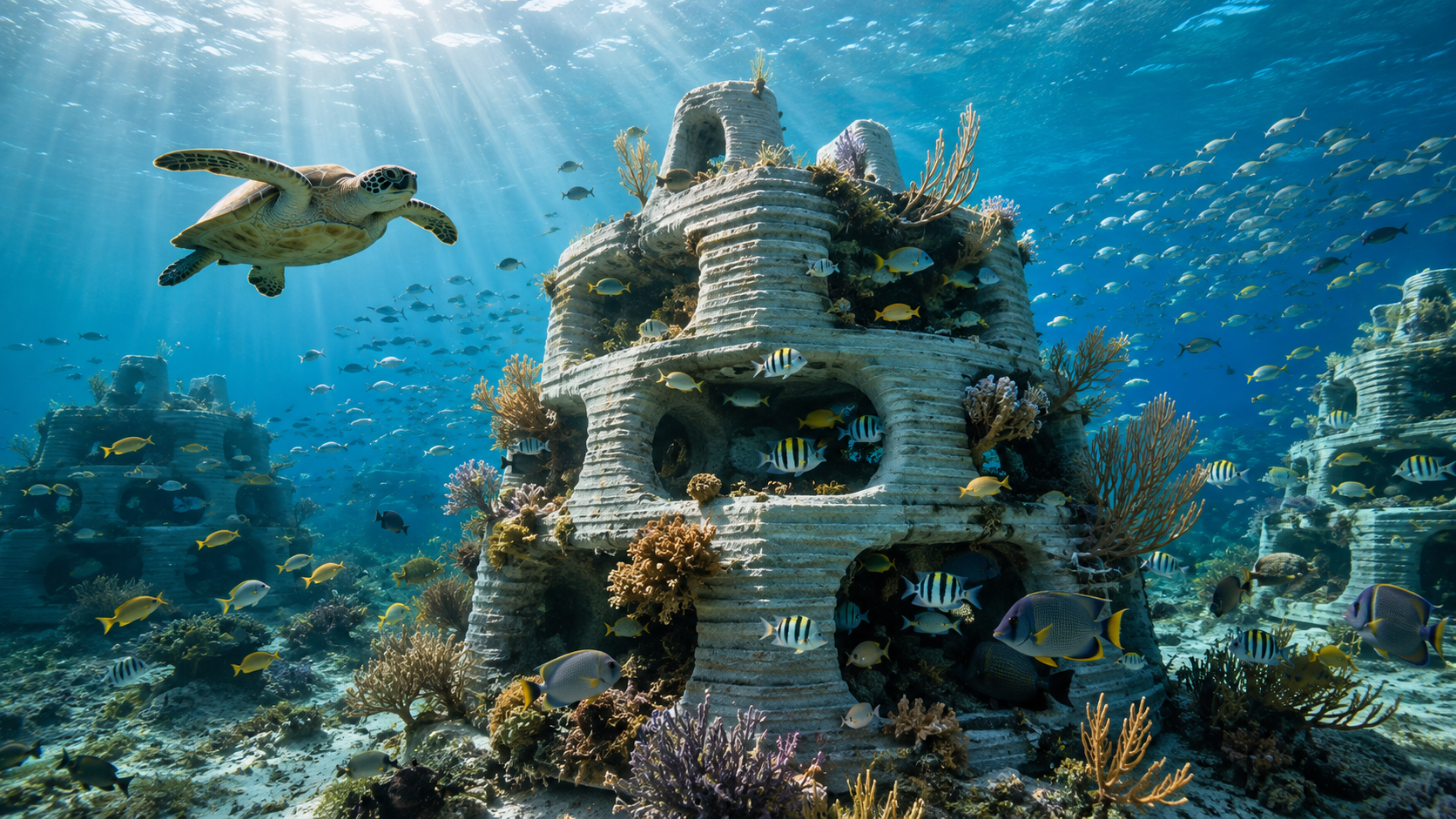
Hybrid structures designed to support oyster, coral, and seagrass habitat while attenuating waves. Use pH neutral materials or textured concrete panels. Siting depends on water depth, salinity, and light. In South Florida, living breakwaters are tested in Broward County and near the Indian River Lagoon. They reduce erosion while improving water quality.
Design Fundamentals for Breakwaters
The stability and longevity of a breakwater depend on careful engineering that considers wave loading, tidal currents, storm surges, and long term durability.
Wave Climate
Use NOAA buoy data from Station 41010 off Cape Canaveral or Station 41113 off Fort Lauderdale. Design for the 50 year or 100 year return period. Significant wave height for the Atlantic side is 8 to 12 feet with a peak period of 10 to 14 seconds. Gulf side waves are smaller, 3 to 6 feet, but storm surge can reach 8 feet.
Water Levels
Tidal range in South Florida is 2 to 3 feet. Add storm surge for a Category 2 hurricane, typically 6 to 10 feet on the Atlantic coast. Breakwater crest elevation is the sum of surge, wave runup, and freeboard. Runup can add another 4 to 8 feet.
Geotechnical
Seabed in South Florida is fine sand over limestone. Core samples determine bearing capacity. A geotextile filter layer is required below the rock to prevent sand loss. For caissons, the foundation bed must be leveled and compacted.
Armor Layer Stability
Use the Hudson formula: W = (gamma_s * H^3) / (K_D * (S_r 1)^3 * cot(theta)). For a 3:1 slope and 10 foot wave, armor stone weight is 7 to 10 tons. Use the Van der Meer method for permeable structures and irregular waves. Concrete armor units like dolos or tetrapods are sometimes used where stone is unavailable.
Overtopping
Design for limited overtopping during the design storm. Allowable overtopping is 1 to 5 liters per second per meter for a protected harbor or 0.1 liters per second per meter for a residential shoreline. The rear slope must be armored.
Cross Section
A typical South Florida rubble mound breakwater has a crest width of 8 to 12 feet, a crest elevation of +10 to +12 feet NAVD88, a seaward slope of 2.5:1, a rear slope of 2:1, and a toe stone apron extending 10 to 15 feet on the sea side.
Construction Methods in South Florida
Construction methods for breakwaters in South Florida must account for shallow limestone seabeds, soft sand, narrow navigation channels, and a 6 month hurricane season. Projects often use barges because land access is limited. Materials come from local quarries or by barge from the Bahamas.
Rubble Mound
Stone is loaded on barges at quarry docks and towed to site. A crane barge with a rock grapple places armor stones individually. Core and underlayer are dumped using a clam shell or side dump barge. GPS guided positioning ensures alignment. Divers check the toe placement. Construction time for a 500 foot breakwater is 4 to 6 months.
Caisson
The concrete caisson is cast in a dry dock, floated, and towed. The stone bed is levelled by a screed barge. The caisson is flooded and sunk. The interior is filled with sand. Toe scour protection of 5 ton stone is placed around the base. Requires calm weather windows.
Geotextile Tubes
Fabric tubes are sewn on land, rolled, and placed on a prepared sand bed. Slurry pumps fill the tube with sand and cement. Tubes are stacked two or three high. Must be covered with rock or concrete if exposed to waves. Used in shallow protected areas like Marco Island and Naples.
Challenges in Breakwater Construction
While breakwaters are essential for coastal protection, their construction and operation pose several challenges.
Environmental Impacts
Construction alters water flow and sediment movement. Dredging can damage seagrass beds. Turbidity plumes reduce light for corals. In South Florida, placement near Biscayne National Park or the Florida Keys requires extensive monitoring. Engineers mitigate by using silt curtains and scheduling work outside spawning seasons.
Structural Risks
Armor stones can displace during a direct hurricane hit. Scour at the toe undermines the structure if the apron is undersized. Overtopping during a storm can erode the back slope. Regular inspections after every named storm are mandatory. A missing armor stone left unrepaired leads to progressive failure.
Cost Overruns
Material transport from the Bahamas or Lake Belt adds cost if fuel prices spike. Weather delays are frequent from June to November. Contractors must have a standby plan for sudden squalls. Change orders for deeper foundations than expected are common.
Permit Denials
The Florida Department of Environmental Protection denies applications that do not include water exchange modeling, sea turtle surveys, or a clear sediment transport analysis. The Army Corps of Engineers enforces strict mitigation ratios. A single error can delay the project by 18 months.
Modern Methods for Eco Friendly Breakwaters
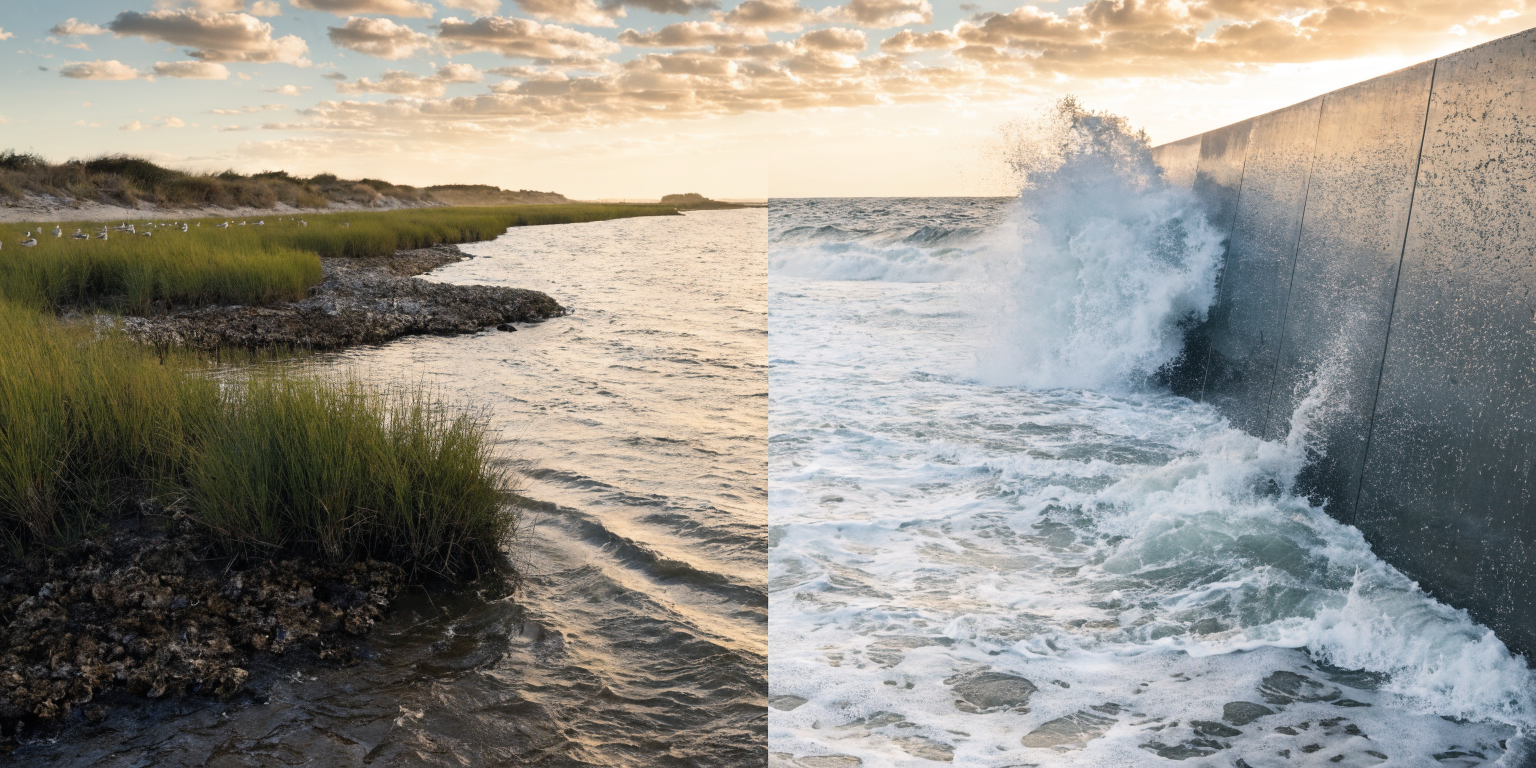
Traditional breakwater construction focuses solely on strength and wave attenuation, often ignoring the ecosystem. A more advanced approach combines structural performance with ecological restoration by using living shorelines and biomimetic design.
One modern solution is the use of Living Seawalls, a one to one structural swap for traditional precast concrete panels. These panels act as barriers against flooding and storm surges while featuring biomimetic textures that restore biodiversity. For existing flat, lifeless concrete seawalls or breakwaters, modular Living Seawall Tiles can be retrofitted to transform them into living ecosystems. These tiles are three dimensionally printed panels that improve local water quality and provide habitat for marine species.
Also, Advanced high resolution 3D printers can fabricate concrete marine structures up to 20 times faster than traditional precast methods. This speed dramatically reduces project timelines, making modern eco breakwaters more competitive with conventional construction.
Final Considerations
A breakwater is the single most effective way to protect a South Florida waterfront property from erosion and storm damage. Rubble mound structures are the proven choice for open coast locations. Living breakwaters add ecological value but require site specific design. Do not build without a wave study and permits. The cost of a permitted, engineered breakwater is far less than the cost of losing your shoreline after one hurricane. For any waterfront project considering breakwater construction, the Kind Designs approach offers a proven way to combine strength, speed, and sustainability.